A blade that performs two percent below its potential looks like a success when it leaves the factory. It only incurs costs once it has been operating in the field for twenty years.
That is what makes wind turbine design difficult. The difference between a good and a very good blade profile cannot be seen, and it does not show up in a single measurement. It appears in energy yield figures accumulated over the turbine's operating life.
Physical testing shows what the blade does. It rarely explains why — and by the time a prototype is ready to measure, most geometry decisions are already locked. CFD simulation brings that insight earlier into the development process, where design changes remain manageable and cost-effective.
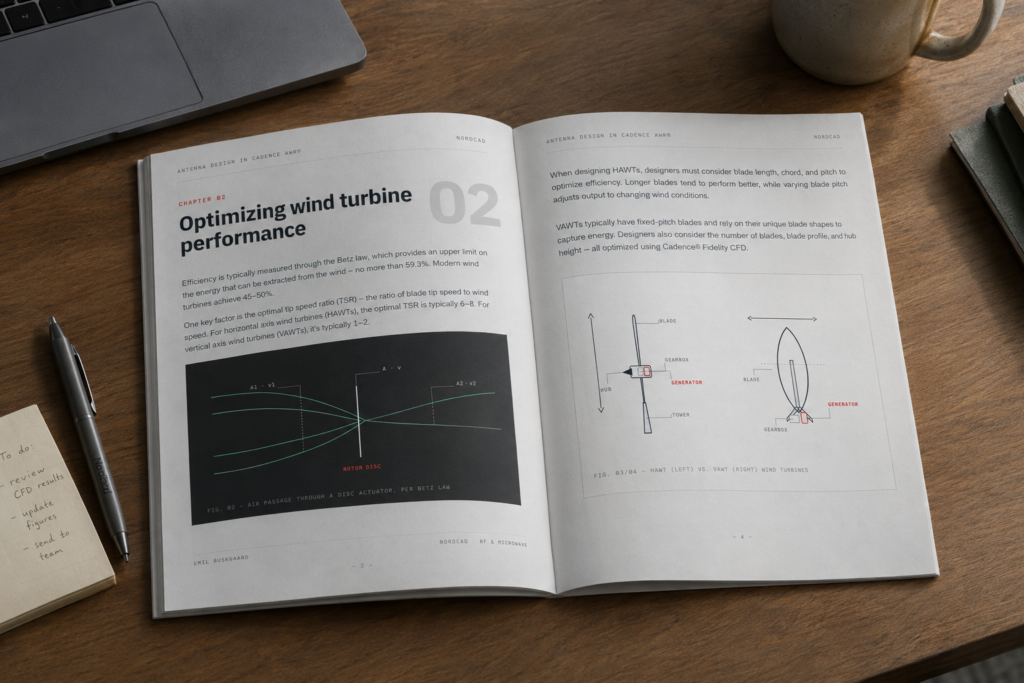
This e-book covers how CFD is applied in wind turbine design: from fundamental design principles to the analysis workflow and the dedicated tools available for the task.
What you will learn
- The four pillars of successful wind turbine design — what underpins a design, and where the trade-offs between them arise
- Optimising turbine performance — which parameters genuinely impact annual energy production (AEP), and which do not
- The five keys to wind turbine blade design — concrete design principles for blade geometry based on aerodynamic analysis
- The step-by-step CFD analysis workflow — from geometry and meshing to setup, computation, and result validation
- CFD methods and software — which techniques fit specific engineering questions, including what Cadence Fidelity CFD covers
Who should read it
The e-book is written for engineers working with wind turbines or aerodynamic components: blade and rotor designers, simulation engineers, and R&D teams at turbine OEMs and their suppliers.
It is equally relevant if you are evaluating whether CFD can reduce the number of physical testing cycles in your development process — and need a clear, practical understanding of the method's capabilities and limitations before deciding.
Why download it
Because the most critical decisions in blade design are made early on, when the least empirical data is available. CFD provides a clear foundation while geometry can still be modified — rather than an explanation after the fact.
The e-book delivers a comprehensive overview of the methodology without requiring you to comb through academic literature. If questions arise along the way, our Nordic CFD specialists are available directly by phone and chat during business hours — even if you are not yet a Nordcad customer.
FAQ
How much does the e-book cost? Nothing. You fill out the form, and we send it directly to your inbox.
Does it require prior CFD experience? No. The analysis workflow is explained from the ground up, allowing you to follow along without specialized simulation background.
Is the content tied specifically to Cadence Fidelity CFD? The design principles and analysis processes are universal and apply regardless of software. The software section uses Fidelity CFD as a concrete example of how they are implemented in practice.