A card can comply with all the rules and still get too hot
Heat is the only physical limitation not specified in the design rules. It becomes apparent during the first functional test—or at the customer’s site after six months. It can be calculated long before that.
Heat is estimated using a spreadsheet and empirical data
The cooling solution will be selected once the card is complete
The voltage drop is first detected during measurement
The cabinet is calculated without the card in
The solution
We can return control to you
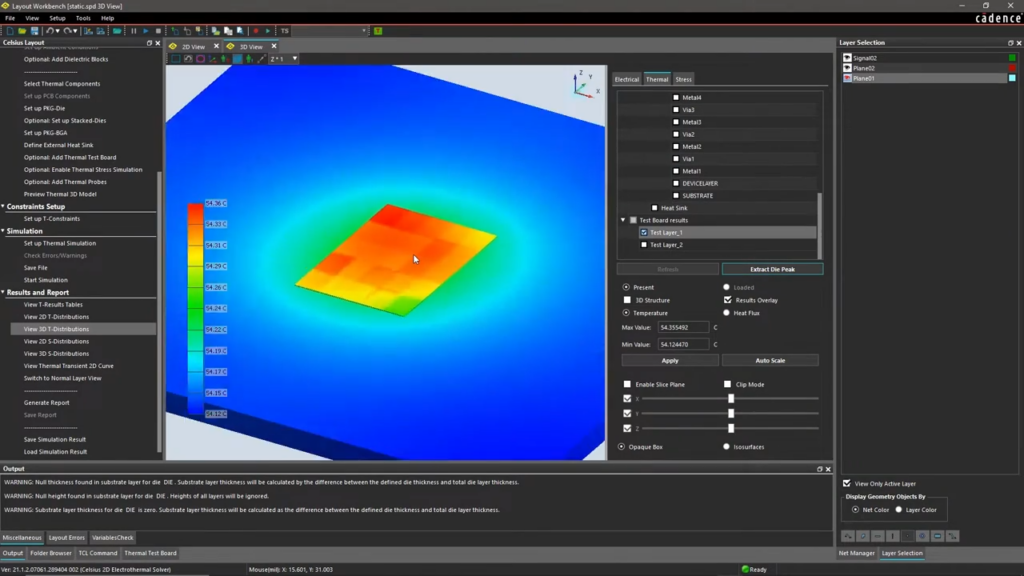
Temperature calculated based on the actual geometry
Cooling evaluated while adjustments can still be made
Electricity and heat calculated in the same model
Boards, components, and enclosure in a single calculation
THE LEVELS
Heat is generated in one place and must be removed from another
A thermal problem is rarely solved right where it arises. That is why calculations are performed on three levels, and these levels are interconnected.
In the copper
The current flowing through planes and paths causes voltage drops and generates heat. This is where the heat comes from, and this is where it is cheapest to address the issue.
Result: a circuit board where the current paths are sized appropriately for the task.
On the map
The components heat each other up. Their placement determines whether the heat is distributed or concentrated in one spot.
Result: a layout that keeps the components within their limits.
Inside the cabinet
The air has to escape. The case, ventilation, and surroundings determine whether the card's cooling system works at all.
Result: a product that maintains a stable temperature, even under the hottest operating conditions.
DISCIPLINES
Four questions about heat, each asked at a different time
They are related, but they are rarely asked at the same time—and rarely by the same person.
How much copper are we losing?
Electric current and heat affect each other: resistance increases with temperature, and temperature increases with current.
Celsius PowerDCVoltage Drop and Current Density in the Schematics
Electrical and Thermal CombinedThe two are calculated in the same model
Paths and PlansWhere the current actually flows
How hot do the components get?
Data sheets specify a limit. The question is, what are the component's actual performance levels in its actual operating environment?
Celsius Thermal SolverTemperature on Boards and Components
Position TestedMove the component before the board is finished
Thermal ModelsThe component is modeled based on its own behavior
Is the heat coming out of the box?
The card may be fine, but the product could still be too hot. The case determines where the heat ends up.
Celsius EC SolverEnclosure, air, and cooling in a single model
Ventilation and FansWhere the air flows—and where it doesn't
The Entire ProductBoard, components, and enclosure combined
Does that hold true in real life?
Few products operate continuously at full load. What determines their service life is how they perform over time.
Stress over timeNot just the worst moment
The surroundings withThe hottest day, not room temperature
A Justifiable MarginA number rather than an estimate
TOOLS
One platform, three levels
Celsius Studio covers everything from the copper to the cabinet. Most people start in one area and expand as the need arises.
Celsius Studio
Platform The comprehensive thermal platform: electrical-thermal analysis, schematics, components, and the enclosure, all in the same environment.
Thermal analysis is easiest to learn using a map you're already familiar with.
Let's start with one of your designsA card that turned out better than expected is a better starting point than an example from a manual.
We'll let you know which level you should start atVery few people need the entire series right from the start. Often, one of the three levels is enough to begin with.
Same-day local supportDirect hotline with real specialists in the Nordics. 96% of our customers stay with us.
It covers heat transfer. The electrical aspects—the circuit, signals, power supply, and radiation—are covered on the simulation and analysis page. Flow and meshing are covered on the CFD page. The three are related, but each is addressed using its own tools.
If the question involves electronics—boards, components, enclosures—it's Celsius. If it involves the flow itself, fluids, or geometry without electronics, it's Fidelity CFD.
For a single card with plenty of space: often yes. It stops working when the components heat each other up or when the case restricts airflow. That’s when the estimate becomes a guess.
The layout and thermal models for the components that generate the most heat. The rest can usually be estimated, and we'll help you determine what's good enough.
Part of the way. Both OrCAD X and Allegro X can give you an idea. If the result is to be used to make a decision about cooling or presented to a customer, Celsius is the answer.
It's the same technology on a different scale. See the solutions page on data centers.
Contact
Bring the card that got too hot
The quickest way to evaluate thermal simulation is to run it on a design for which you already know the results. If you had a product that had to be modified at the last minute, that’s the best place to start. No sales pitch. No pressure.


 SOLUTION · THERMAL SIMULATION